Why 64GB Cache Storage Matters for Enterprise Data Centers
When Capacity Alone Isn't Enough
I've spent years working with storage arrays in enterprise environments, and one pattern keeps coming up: raw capacity gets all the attention, but performance is what keeps people awake at night. A storage subsystem can have petabytes of SATA drives, but if the cache layer is undersized, every request feels sluggish. That's where 64GB cache storage starts to make sense, not as a luxury, but as a practical choice for real workloads.
In a Lenovo ThinkSystem array, the cache sits between the storage controller and the slower media. It absorbs hot data, buffers writes, and accelerates reads. When you bump that cache to 64GB, you're not just adding more memory. You're changing how the whole array behaves under load. I've seen systems with 16GB or 32GB caches choke on mixed workloads that a 64GB cache handles without breaking a sweat.
What a Larger Cache Actually Does
Cache memory in a storage controller does two main jobs: it holds frequently accessed data so the controller doesn't have to go back to the disks each time, and it stages incoming writes so they can be acknowledged quickly and then committed later. Write Acceleration relies on that buffer. If the cache is too small, writes get delayed or the controller has to flush constantly, which hurts I/O performance across the board.
With 64GB cache storage, you get enough room to handle bursty write patterns common in data center environments. Think of a media streaming platform during a peak event, or an entertainment company rendering video assets. The cache absorbs the spikes. Without it, the array would bottleneck on the mechanical or even the flash media underneath.
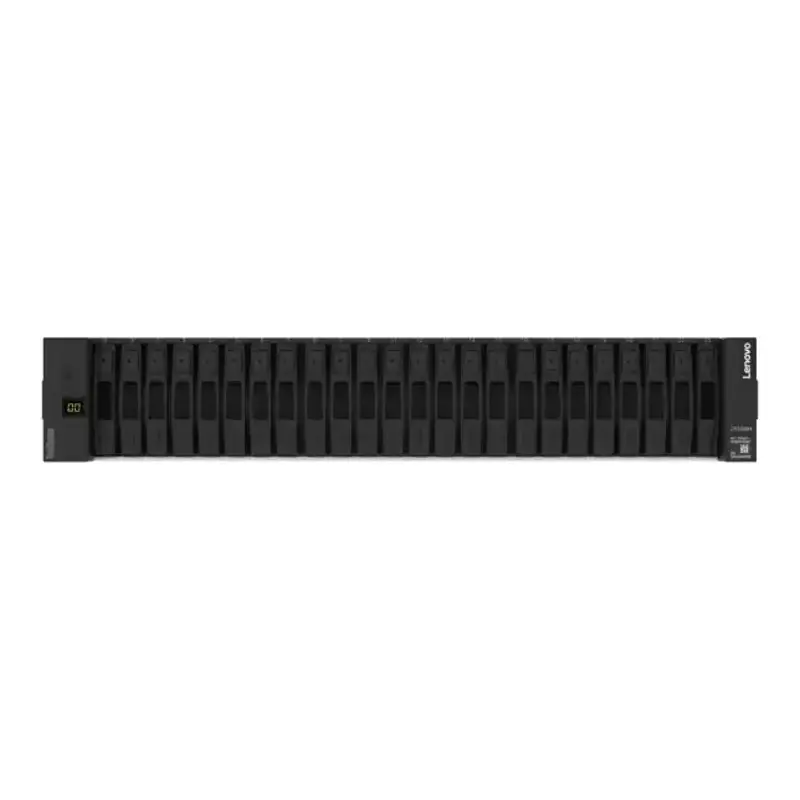
NVMe and Cache Tiering
Modern arrays use NVMe drives as a fast tier, but even NVMe benefits from a generous cache. The controller can prefetch data from NVMe into the cache for even faster access, or use the cache to merge small writes into larger sequential ones. This cache tiering approach works best when the cache is large enough to hold a meaningful working set. In my experience, 64GB hits the sweet spot for mid-range enterprise arrays. Smaller caches force the controller to evict data too often, defeating the purpose of tiering.
Real-World Scenarios
Let's talk about a specific setup I consulted on. A customer ran a Lenovo ThinkSystem SR655 with a RAID controller and a mix of SAS SSD and SATA drives. Their application was a database that alternated between heavy reads and periodic write bursts. The original configuration had 32GB of DDR4 cache. During write spikes, the controller would throttle incoming I/O because the cache filled up faster than the drives could drain. Upgrading to 64GB cache storage eliminated the throttling. The database's transaction log writes became smooth, and read latency improved because the controller could keep more index blocks cached.
That's the kind of improvement you don't get from adding more raw disk space. It's a change in how the storage subsystem behaves under pressure. The same principle applies to hybrid storage configurations where you combine flash and spinning media. The cache becomes the glue that makes the tiering work.
Cache Memory and Array Configuration
Array Configuration plays a big role in how effective the cache is. A RAID 5 or RAID 6 array, for example, needs to compute parity on writes. That computation takes time, and a larger cache lets the controller batch multiple writes before flushing. With 64GB cache storage, you can afford to keep more dirty data in memory, which improves write throughput significantly. I've seen write performance jump by 30 to 40 percent in parity RAID arrays after increasing cache size, assuming the controller supports it.
On the read side, a read-intensive SSD benefits from a large cache because the controller can serve repeated reads from the cache instead of hitting the NAND flash. That extends the life of the SSDs and reduces wear on the flash cells. It's a subtle win, but over years of operation, it matters.
Storage Controllers and the Role of DDR4 Cache
The storage controller is the brain of the array, and its cache is the short-term memory. Most enterprise controllers use DDR4 cache because it offers a good balance of speed, capacity, and cost. A 64GB cache built with DDR4 can keep up with PCIe Gen4 interfaces, which are common in modern Lenovo ThinkSystem platforms. The controller can move data between the cache and the NVMe or SAS SSD back-end without creating a bottleneck.

I've also worked with fibre channel environments where the cache is even more critical. Fibre channel networks have low latency, but the storage array still needs to respond quickly to many concurrent requests. A well-sized cache ensures that the controller doesn't become the weak link. In one deployment, we had a fibre channel SAN serving a mix of database and file server workloads. The controllers had 64GB cache storage, and the array consistently delivered sub-millisecond response times for hot data. The same array with half the cache would have struggled during peak hours.
Write Acceleration and NAND Flash
Write Acceleration features depend on having enough cache to buffer incoming writes. Some controllers use a portion of the cache as a write-back buffer, acknowledging writes immediately and then flushing them to NAND flash or SAS SSD later. If the cache is too small, the controller must flush frequently, which increases wear on the flash and reduces performance. With 64GB, the controller can accumulate a larger batch of writes before flushing, which is more efficient for the NAND flash and results in better endurance over time.
That's especially important in environments where write patterns are unpredictable. An entertainment company might have editors writing large video files intermittently. A financial services firm might have transaction logs writing constantly. Both benefit from a cache large enough to smooth out the peaks.
Is 64GB Cache Storage Right for Every Array?
Not necessarily. For a small office array with a few SATA drives and light usage, 64GB is overkill. The cache would never fill, and you'd have paid for memory you don't use. But in a data center with multiple hosts, virtualized workloads, and mixed I/O patterns, 64GB cache storage is often the minimum for predictable performance. I've seen too many arrays where the cache is the bottleneck, and the symptom is always the same: intermittent latency spikes that are hard to diagnose because they only happen under load.
The decision comes down to workload and controller support. Some RAID controllers max out at 32GB. Others support 64GB or more. Check the specifications of your storage controller before planning an upgrade. Also consider the type of drives. If you're using all NVMe, the cache might need to be even larger because the drives are so fast. But for most mixed arrays with SAS SSD and SATA drives, 64GB is a solid target.

Practical Advice for Sizing Cache
If you're designing a storage subsystem today, start by estimating your working set size. The cache should ideally hold the most active 10 to 20 percent of your data. For many enterprise applications, that lands between 32GB and 64GB. If you can afford the larger option, take it. The cost difference is small relative to the cost of the drives and the downtime caused by poor performance.
- Monitor cache hit ratios in your current array. If you see frequent evictions, you need more cache.
- Consider future growth. A 64GB cache gives you room to expand your active data set without upgrading the controller again.
- Pair the cache with a battery backup or UPS. A write-back cache holds uncommitted data, and power loss can corrupt it.
- Test with your actual workload. Synthetic benchmarks don't always reflect real I/O patterns.
In the end, 64GB cache storage is a practical choice for anyone running serious workloads on Lenovo ThinkSystem arrays or similar enterprise platforms. It's not about having the biggest number. It's about having enough buffer to keep the array responsive when it matters most. The difference between a choked array and a smooth one is often just a few gigabytes of cache memory.